Beyond the Living Room TV
For nearly three decades, Bangladeshi home entertainment followed a strict, linear blueprint. Families gathered around television sets at scheduled hours to watch natoks (single-episode television dramas) or highly sanitized mega-serials. These productions, while beloved, were bound by rigid broadcast regulations, conservative advertising demands, and predictable formulas.
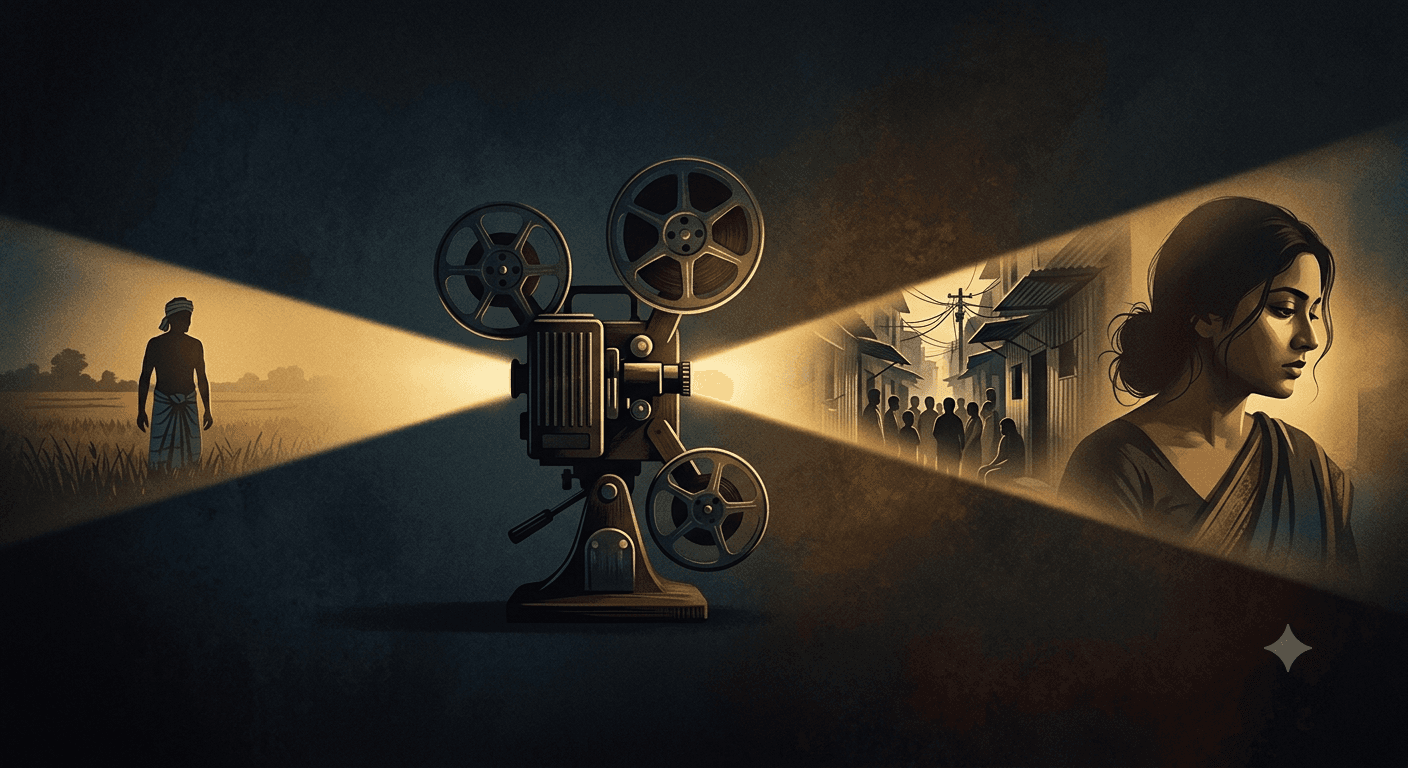
The structural landscape shifted permanently with the explosive arrival of over-the-top (OTT) streaming platforms. Local platforms like Chorki and Binge, alongside regional players like Hoichoi, bypassed the traditional television distribution pipeline entirely. What began as a convenient alternative for mobile viewing quickly matured into a full-scale creative renaissance. Today, Bangladeshi web series routinely go viral, captivating not just domestic audiences but the global Bengali diaspora.
THE OLD TELEVISION MODEL
- Strict Public Censorship
- Advertiser Driven
- Rushed Production Cycles
- Monolithic Genres
THE MODERN OTT LANDSCAPE
- Creative Autonomy
- Subscription Funded
- Cinematic Production Realism
- Genre Diversification
Unshackling the Narrative: Breaking the Taboo
The primary catalyst behind the viral success of local OTT platforms is creative freedom. Free from the constraints of public broadcast censorship boards, creators can finally explore complex aspects of contemporary life.
Audiences are no longer confined to stories of urban romance or mild family drama. Platforms have paved the way for gritty crime procedurals, psychological thrillers, political allegories, and psychological horror.
The Crime Thriller Boom: Series like Raihan Rafi’s Syndicate and Myself Allen Swapan treat criminal underbellies with a raw realism previously forbidden on network TV. They explore corporate corruption, money laundering, and the psychology of anti-heroes.
Elevated Horror & Folklore: Nuhash Humayun’s Pett Kata Shaw revived rural folklore through a modern, psychological horror lens, proving that local cultural myths could match international prestige horror standards.
By presenting characters who speak naturally, face genuine moral dilemmas, and live in recognizable environments, OTT platforms have established a deep sense of authenticity that traditional television lacks.
The New Aesthetic: Industrializing Production Values
The viral nature of these series is also driven by a massive leap in technical execution. Television natoks were notoriously produced on shoestring budgets, often shot within 48 to 72 hours, leading to flat lighting, generic sound design, and repetitive staging.
OTT platforms treated content as prestige cinema. Directors are given the financial backing and schedule extensions required for deep pre-production, thorough character workshops, and meticulous environmental design. The visual language has evolved through high-end digital cinematography, complex color grading palettes, and immersive multi-track sound engineering. This technical transformation ensures that a series produced in Dhaka can sit seamlessly on a user's feed alongside high-budget international imports, removing any barrier to global appeal.



Comments
0Join the discussion
You must be logged in to leave a comment.