An interview-style feature on the business of digital video creation.
The perception of YouTube content creation in Dhaka has transformed radically. What was once dismissed as a transient hobby for tech-savvy teenagers has institutionalized into a multi-million taka creator economy. To understand the operational logistics, monetization structures, and strategic choices driving this shift, we interviewed three prominent figures shaping the digital video space in Bangladesh.
Panelist Profiles
- The Tech Reviewer: Tahmid – Managing a team of twelve production specialists, scriptwriters, and editors focused on consumer electronics.
- The Cultural Storyteller: Nabila – Producing mini-documentaries exploring the hidden histories, culinary shifts, and human stories of Bangladesh.
- The Lifestyle/Vlogger Multi-Hyphenate: Fahim – Specializing in high-energy urban adventure, travel, and comedic social commentary.
Interviewer: Let us start with the structural shift. When did you realize that content creation had evolved from a solo hobby into an enterprise that requires an actual corporate framework?
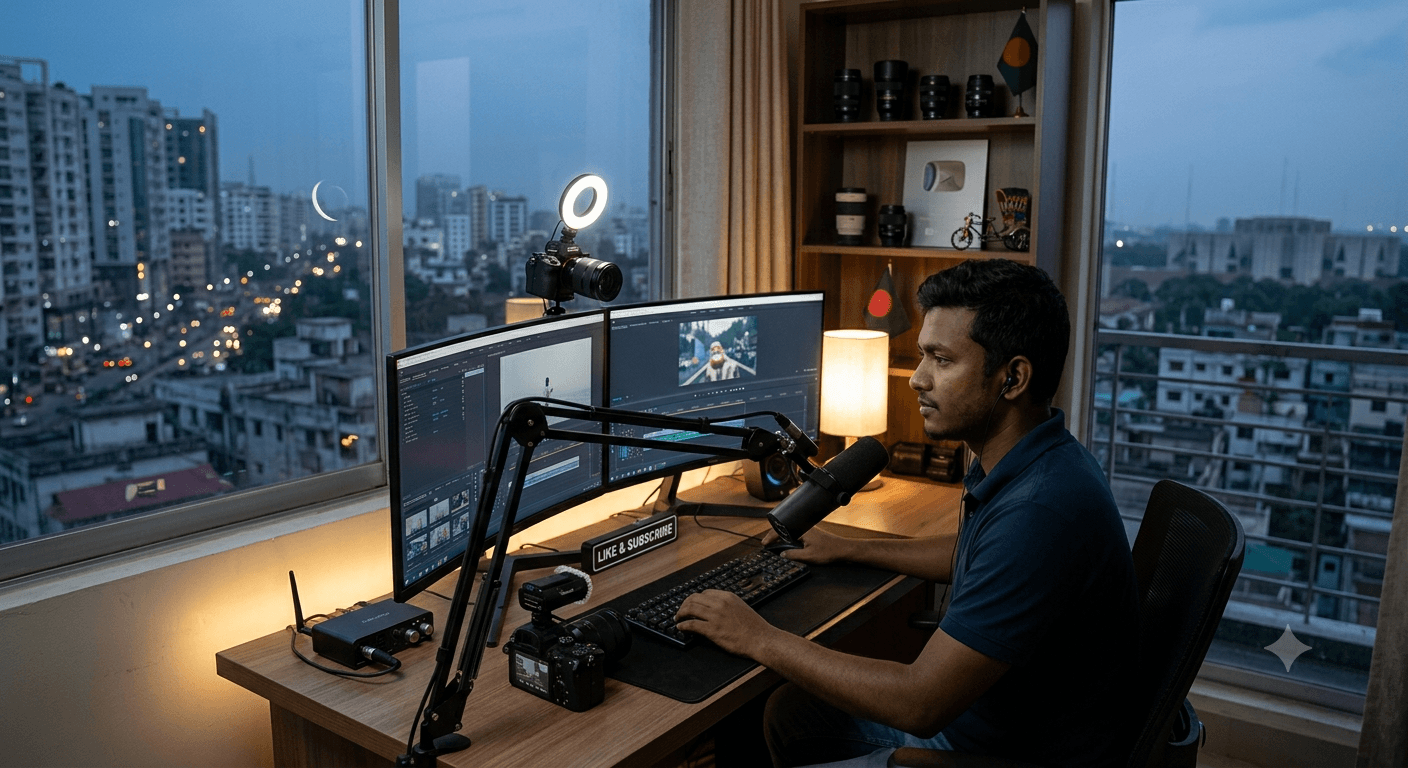
Tahmid (Tech): For me, it was the moment the inventory logistics outgrew my bedroom. In the early days, you could shoot a smartphone review with a single camera, standard window light, and edit it yourself on a basic laptop. But as the audience grew, their technical literacy skyrocketed. To maintain authority, we had to invest in dedicated studio spaces, professional acoustic treatment, macro lenses, and colorists. Today, I don’t just run a channel; I manage a corporate payroll, negotiate equipment lease agreements, and handle intellectual property clearance. If you don't treat your channel like an agency, you plateau almost immediately.
Nabila (Cultural Storyteller): My shift was driven by research demands. Producing deep-dive cultural documentaries means you cannot simply turn on a camera and wing it. It requires months of archival cross-referencing, field production, and securing travel permits for rural areas. I had to hire full-time researchers and fixers. The moment you are employing people whose livelihoods depend entirely on your editorial pipeline, any illusion of this being a casual hobby disappears.
Interviewer: The South Asian market is notoriously challenging regarding AdSense revenue due to lower cost-per-mille (CPM) metrics compared to the West. How have you structured your business models to remain profitable?
Revenue Model
- YouTube AdSense: Baseline operational costs only
- Direct Corporate Sponsorships: Primary profit engine
- Production Consultancy / B2B Services: Diversified income stream
- Merchandising / E-Commerce: Direct community value and supplemental revenue
Fahim (Lifestyle): Relying solely on YouTube AdSense payouts in Bangladesh is financial suicide if you have overhead. It might cover your basic transport and tea bills, but it won't fund a premium production. The real survival engine is local corporate integration. We had to learn how to pitch directly to consumer packaged goods (CPG) companies, telecommunication giants, and banking apps. The trick is avoiding lazy, inorganic product placements. Instead of holding up a product and reading a script, we write the brand naturally into the narrative fabric of the video.
Tahmid (Tech): We diversified into business-to-business (B2B) video production services. Because our team developed high expertise in high-end commercial cinematography, corporate brands now hire our internal media house to produce their official promotional materials and advertisements. We use our consumer channel as a living portfolio to secure high-ticket enterprise contracts.
Interviewer: Dhaka has an incredibly vocal, highly active, but sometimes volatile digital audience. How do you design your content to maintain long-term retention and brand loyalty?
Nabila (Cultural Storyteller): You have to build an ironclad community culture based on trust. The Dhaka digital audience detects insincerity instantly. If you shift your values for a quick brand payout, they will call you out in the comment section within minutes. I treat my audience as co-curators—regularly hosting community polls, addressing their critiques transparently, and producing content that respects their intelligence rather than chasing low-effort engagement metrics.




Comments
0Join the discussion
You must be logged in to leave a comment.