

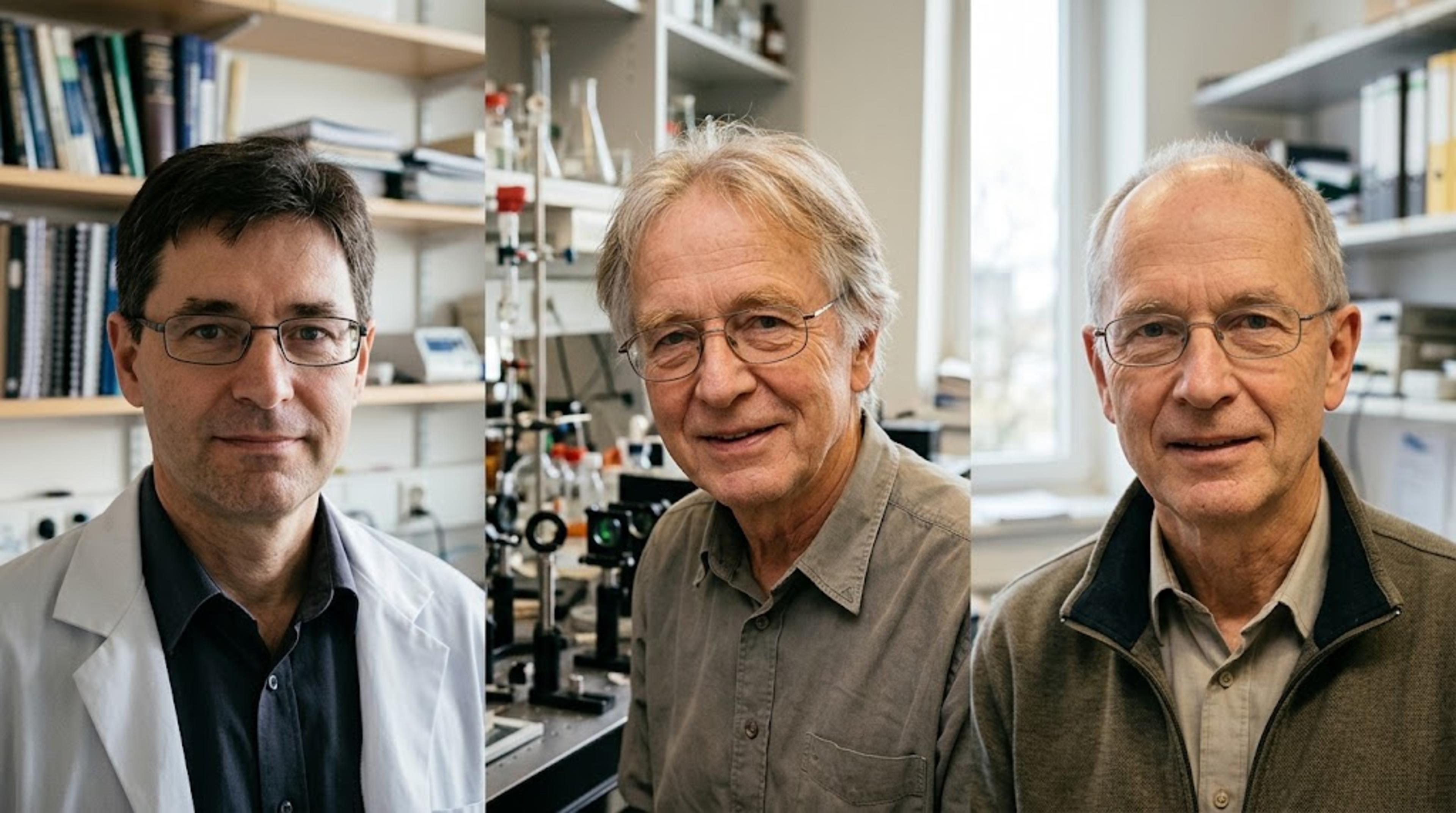
The 2026 Nobel Prize in Medicine has been awarded to American neuroscientist and psychiatrist Karl Deisseroth alongside German biophysicists Peter Hegemann and Georg Nagel for developing optogenetics, a technique that uses beams of light to switch individual nerve cells on and off inside the living brain.
Announced on Monday, October 5 by the Nobel Assembly at Sweden's Karolinska Institute in Stockholm, the official Nobel citation honors the trio "for their discoveries concerning light-gated ion channels and optogenetics." The three laureates will equally share the 12 million Swedish kronor ($1.2 million) prize purse.
For decades, neuroscientists struggled with a basic mechanical problem: the mammalian brain packs tens of billions of intertwined neurons that communicate through rapid electrical and chemical pulses. Stimulating brain tissue with metal electrodes was like trying to play a single piano key using a sledgehammer, because electricity activates every nearby cell at once. Drugs acted too slowly, taking minutes or hours to wash through the bloodstream while researchers needed to track thoughts, movements, and memories happening in milliseconds.
The solution that transformed brain science did not come from studying human tissue. Instead, it began with a basic question about how single-celled green pond algae swim toward sunlight.
How Pond Algae Gave Neuroscience a Light Switch
In the 1980s and 1990s, Peter Hegemann, then working at the Max Planck Institute for Biochemistry in Germany and now a professor at Humboldt University of Berlin, studied a microscopic green alga called Chlamydomonas reinhardtii. Each algal cell carries a tiny orange "eyespot" on its surface that senses light and guides the organism's movement so it can photosynthesize.
Using microscopic electrodes, Hegemann discovered that the alga reacted to light at astonishing speed. Within half a millisecond of illumination, an electrical current surged across the cell's outer membrane. That speed suggested that a single protein was doing two jobs at once: capturing light photons and opening a physical gate, known as an ion channel, to let charged particles flow into the cell.


Comments
0Join the discussion
You must be logged in to leave a comment.