

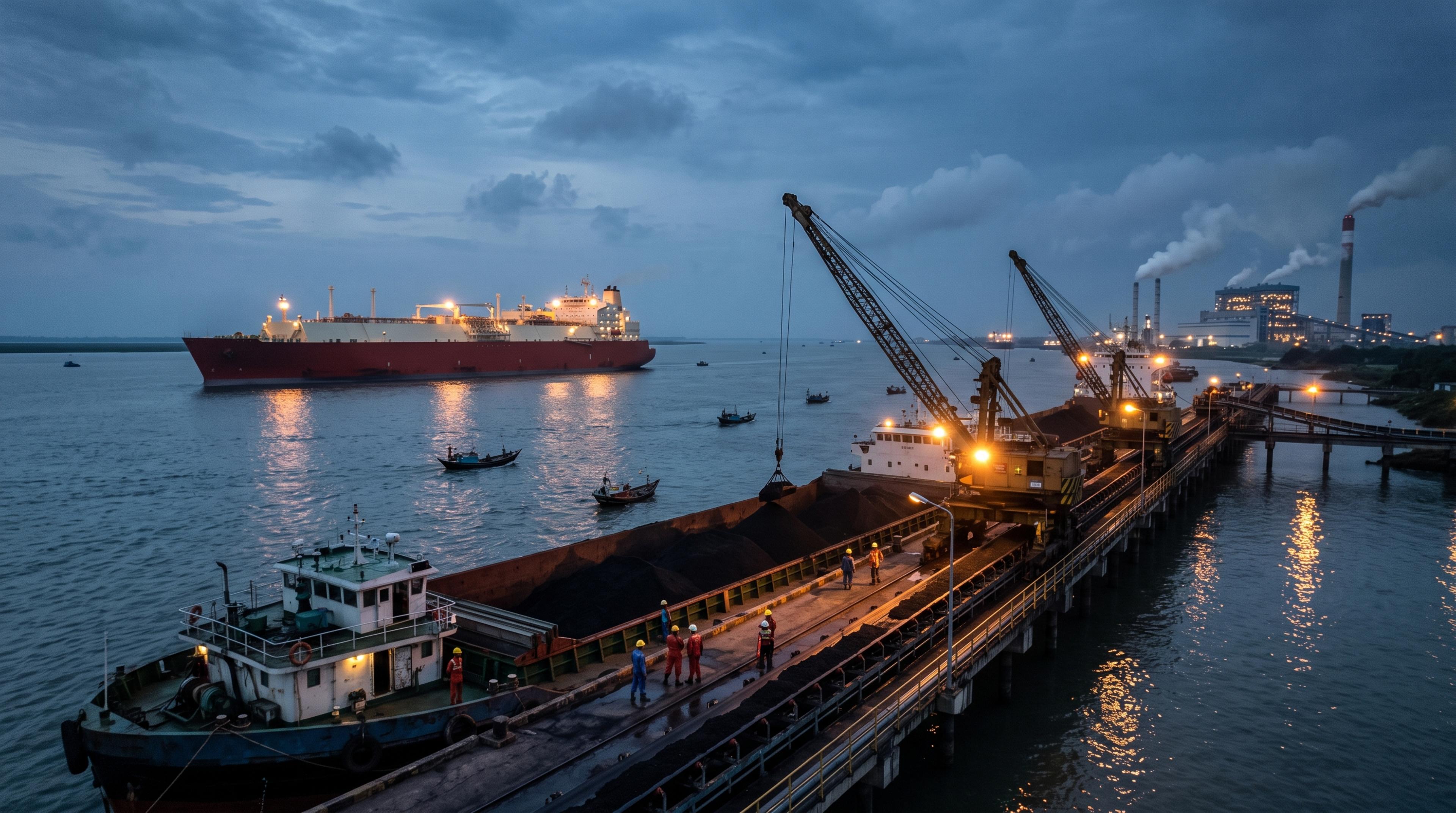
For decades of Bangladesh Coal Power, natural gas was the undisputed backbone of Bangladesh’s economy. At its peak, domestic gas fields generated more than 90 percent of the nation’s electricity, firing the captive boilers of textile mills in Gazipur and keeping the lights on across Dhaka. When those onshore gas reserves began to run dry in the late 2010s, global energy exporters saw an obvious successor: liquefied natural gas (LNG), super-cooled methane shipped by sea.
That script just broke. During the peak summer cooling months of 2026, Bangladesh coal power overtook gas-fired electricity generation on a monthly basis for the first time on record, according to electricity generation data tracked by the energy think tank Ember and reported by Reuters and The Daily Star on October 2.
The crossover is more than a domestic utility statistic. Across the global energy industry, multibillion-dollar LNG export terminals are currently under construction in the United States, Qatar, and elsewhere on the assumption that fast-growing, gas-short economies in South and Southeast Asia will absorb the new supply. Instead, Bangladesh’s summer fuel switch demonstrates what happens when geopolitical price shocks collide with the fiscal limits of a developing economy: when imported gas gets too expensive, price-sensitive buyers burn coal instead.
How a $24-Per-MMBtu Shock Priced Gas Out of the Grid
To understand why utilities in Dhaka pivoted away from gas this summer, look at the invoice for a single tanker of imported fuel.
Throughout 2026, the war involving the United States, Israel, and Iran has severely disrupted maritime energy traffic through the Strait of Hormuz, a narrow waterway that normally handles roughly 20 percent of global LNG trade and 25 to 30 percent of global oil shipments. For Bangladesh, the chokepoint crisis hit home directly. QatarEnergy, Dhaka’s largest long-term supplier, reduced its scheduled 2026 deliveries after conflict-related damage to its LNG infrastructure, forcing state-owned oil and gas corporation Petrobangla to hunt for replacement shipments on the open spot market.



Comments
0Join the discussion
You must be logged in to leave a comment.